
"Qing Dynasty diplomacy"
1600 article(s) found

What are the famous brands of tea in Taiwan? a brief introduction to the historical story of Taiwan tea culture.
As early as the 17th century, two wild native tea subspecies, Taiwan Camellia and Hongya Camellia, were discovered in Taiwan. However, because of their bitter taste and thin, crisp leaves, they have little economic value and are not widely used. More than 200 years ago, Chinese mainland some tea trees from Fujian Province were shipped to Taiwan. This is the beginning of Taiwan's tea culture. During the Qing Dynasty, different tea varieties came from Fujian

Coffee Culture Common sense Coffee and Tea infiltrate Culture
In the long journey of looking for coffee, we can feel the countless romance of people's enthusiasm and adventure, and these beautiful legends will continue to be handed down, because it bears a kind of emotion and will. it is also a deep-rooted historical reflection in the concept of humanities. There is an interesting and plausible legend that the discovery of coffee benefited from animals. About five hundred

Introduction to the characteristics of Bali Coffee Flavor Manor which is bitter, sweet and fragrant but not sour
Buddhism and Hinduism began to be introduced into Bali during the dynasty of Sharentra, the Buddhist kingdom of Java. Elka first unified Bali and Java, and then after the Neo-Kesari dynasty, Manopacher, the Hindu kingdom of Java, reunified the two places in 1343. Hinduism began to enter Bali on a large scale and merged with the original Buddhism. The rise of the Islamic Kingdom in 1515 and

The Origin of Bali Coffee introduction to the Flavor description of planting History and Culture
Around the 10th century, Indian civilization influenced the whole of Southeast Asia and was introduced into Bali through Java, providing the embryonic form of later Balinese literature, art, social organization and politics. In the 13th century, Hindu Javanese began to rule Bali; Islam was introduced into Java in 1515, prompting a large number of Hindu monks, aristocrats, soldiers, craftsmen and artists to flee to Bali

Chaozhou Kungfu Tea tea set introduction what tea set Kungfu Tea uses to drink Kungfu Tea step teaching
According to the Collection of Purple Medicine in the Geography of Chaozhou, people in Chaozhou love to drink tea. they make their own tea, which is called Kungfu Tea. Yuan Mei lived in the Qing Dynasty vividly describing the ancient customs of tea tasting will be in his food Yuan Mei's list, cup small walnut, pot small round bergamot, each cup of tea people do not want to drink, taste perfume first, taste second, slowly chew it, feel, its most mellow taste and

Common sense of Coffee Culture Coffee's "History of aggression" to Human beings II
The widespread spread of coffee in Europe around the world has also brought some problems. A large number of imported coffee beans have caused large foreign exchange losses, coupled with the threat of freedom of speech in cafes to the rule of the authorities. At that time, the rulers of European countries first adopted the way of cutting expenditure, closing cafes and banning people from drinking coffee, but coffee and cafes have become a trend and have been banned repeatedly, so they are opened.

The History of Coffee introduction and expansion in China in the early stage (2)
1. The presentation of the respective expressions and questions of Zhu Kula Coffee 1.1 I remember that it was still the spring of 1995, when Professor Mao Genhai of the former South China Hot farming Academy and I visited Xishuangbanna, Yunnan Province. I had the honor to see the review and prospect of Yunnan coffee development published in the third issue of Tropical crop Science and Technology in 1994 by Huang Junxiong and Zhang Xingcan, Institute of Tropical and Subtropical Economic crops, Yunnan Academy of Agricultural Sciences
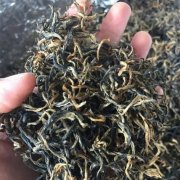
Yingde specialty authentic Yinghong No. 9 black tea how much is a jin of Yinghong No. 9 black tea suitable for who to drink?
Some of the best Guangdong black tea is produced in Yingde in Guangdong Province. Yingde has been a tea producing area since the Tang Dynasty. At the beginning of the Ming Dynasty, Yingde black tea was chosen as a tribute to others. Yingde black tea, Yunnan Dianhong and Anhui Qihong are known as the three major black teas in China. My favorite tea is Yinghong 9. The dry leaves are black and they are reddish brown after brewing. This tea comes from Daye, Yunnan.

Yunnan Coffee Yunnan Lujiangba Coffee Manor introduces Yunnan coffee producing areas
Professional coffee knowledge exchange more coffee bean information please follow the coffee workshop (Wechat official account cafe_style) in 1892 (18 years of Guang Xu of the Qing Dynasty), French missionary Tian Deneng planted the first coffee tree in Zhugula Village, Binchuan, Dali, which opened the prelude to Chinese mainland coffee cultivation. Lujiangba in Baoshan, dry and hot valley climate is very suitable for the cultivation of coffee, because the back is Gaoligong Mountain

The respective expressions and questions of the introduction years of Zhukula Coffee in Chinese Coffee Culture
1.1 I remember that it was still the spring of 1995, when Professor Mao Genhai of the former South China Hot farming Academy and I went to Xishuangbanna, Yunnan Province. I had the honor to see Huang Junxiong and Zhang Xingcan, Institute of Tropical and Subtropical Coffee, Yunnan Academy of Agricultural Sciences, published a paper on the development of Yunnan coffee in 1994 in the third issue of Tropical crop Science and Technology, from which we got the information about the earliest introduction of Yunnan coffee.
History of Coffee planting in the early stage of Coffee introduction and expansion in China (2)
1. The presentation of the respective expressions and questions of Zhu Kula Coffee 1.1 I remember that it was still the spring of 1995, when Professor Mao Genhai of the former South China Hot farming Academy and I visited Xishuangbanna, Yunnan Province. I had the honor to see the review and prospect of Yunnan coffee development published in the third issue of Tropical crop Science and Technology in 1994 by Huang Junxiong and Zhang Xingcan, Institute of Tropical and Subtropical Economic crops, Yunnan Academy of Agricultural Sciences

Flavor and taste of small coffee beans in Yunnan Pu'er teaching of water temperature extraction of hand-made coffee powder
Professional coffee knowledge exchange more coffee bean information please follow the coffee workshop (Wechat official account cafe_style) Yunnan small coffee has a long history, Yunnan became the sphere of influence of France at the end of the Qing Dynasty, thus began to grow coffee beans, in recent years have introduced high-quality coffee bean cultivation, international coffee organizations taste

The ratio of Chinese tea to western coffee culture
Tea, coffee and cola are called the three largest drinks in the world, and the largest consumption is tea and coffee. Coffee plays an irreplaceable role in the life of westerners, no matter in school, company, shopping mall or at home, everyone enjoys it with a coffee cup, while tea is deeply rooted in Chinese life, it is not only a kind of drink, but also carries Chinese culture. Tea and coffee represent

The origin of the name of Sumatran plus young plateau coffee
There are two theories about the origin of the name of Sumatra: first, the name of Sumatra comes from Sanskrit SamudraDvipa, Samudra means sea, and Dvipa means island, so Sumatra was called Sumutrabhumi in ancient times, meaning brilliant and beautiful country. The synonym of this name is Sumatra Bumi (Sumatra), which evolved from Bumi in Sumatra.

Common sense of Coffee Culture Tea Culture History and Coffee Culture History
Tea, coffee and cola are called the three largest drinks in the world, and the largest consumption is tea and coffee. Coffee plays an irreplaceable role in the life of westerners, no matter in school, company, shopping mall or at home, everyone enjoys it with a coffee cup, while tea is deeply rooted in Chinese life, it is not only a kind of drink, but also carries Chinese culture. Tea and coffee represent

Bitter, sweet, fragrant but not sour Balinese coffee flavor taste manor boutique coffee introduction
In 1908, the Dutch flag was finally planted all over Indonesia and Bali, and the Bali aristocracy ended the era of aristocratic rule in several Puptan rituals that committed suicide for dignity. The Dutch ruled Bali for 34 years, followed by three more years by the Japanese during World War II. It was not until 1949, with the intervention of the United Nations, that the Netherlands withdrew from Indonesia and the island.
Common sense of Coffee Culture the ratio of Chinese tea to western coffee culture
Tea, coffee and cola are called the three largest drinks in the world, and the largest consumption is tea and coffee. Coffee plays an irreplaceable role in the life of westerners, no matter in school, company, shopping mall or at home, everyone enjoys it with a coffee cup, while tea is deeply rooted in Chinese life, it is not only a kind of drink, but also carries Chinese culture. Tea and coffee represent
Introduction of Coffee Flavor and Taste characteristics of Yunnan Coffee Bean Variety Katim Catimor
Professional baristas please follow the coffee workshop (Wechat official account cafe_style) Katim (English name Catimor) Katim is a Kaddura-Timor hybrid not confused with Kaddura and Kaduai. This highly resistant plant has the ability to resist coffee leaf rust, so at 20.
The spread of coffee
1. Coffee was introduced into Europe in the 16th century, and coffee attracted the attention of European countries in the name of Arabic wine. In the middle of the 17th century, coffee became popular in Europe. 2. When coffee was introduced into Asia in 1600, Baba Budan, a Muslim, successfully smuggled seven seeds on his belly and planted them for trial in the mountains of Mysore in southern India without large-scale cultivation. sixteen
The spreading history of coffee
1. Coffee was introduced into Europe in the 16th century, and coffee attracted the attention of European countries in the name of Arabic wine. In the middle of the 17th century, coffee became popular in Europe. 2. When coffee was introduced into Asia in 1600, Baba Budan, a Muslim, successfully smuggled seven seeds on his belly and planted them for trial in the mountains of Mysore in southern India without large-scale cultivation. sixteen